Stage 2 Water Restrictions In Effect
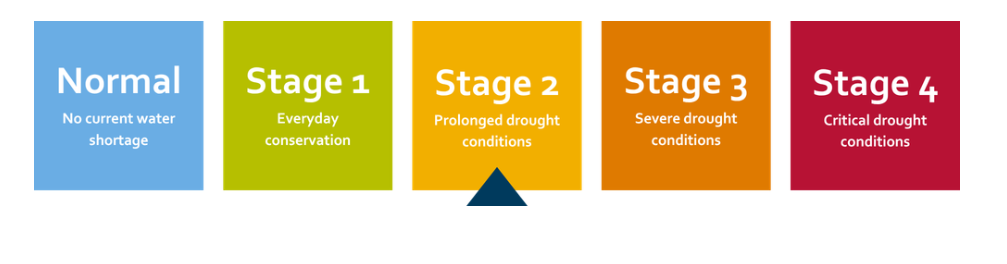
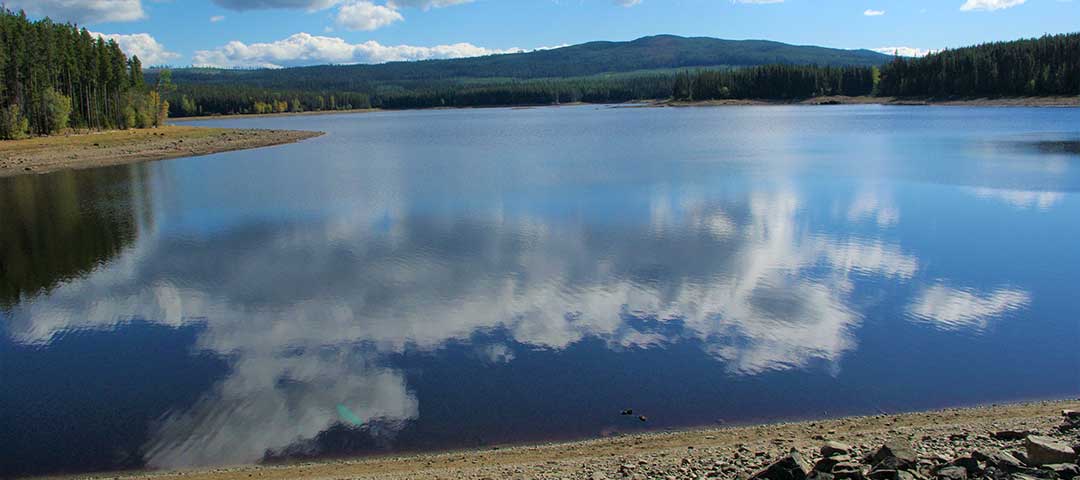
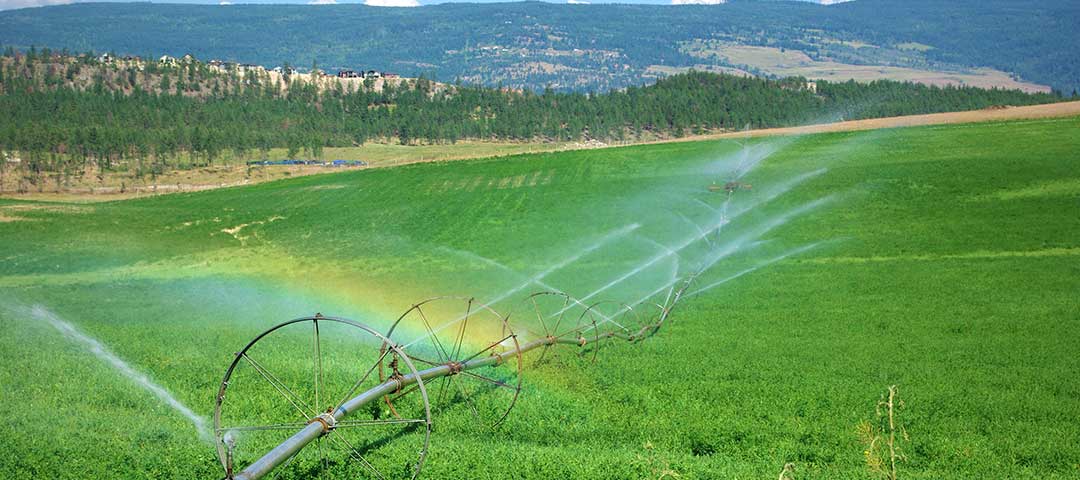
Stage 2 water restrictions are now in effect for customers of the Glenmore-Ellison Improvement District (GEID), effective immediately, due to ongoing dry conditions and increased water demand. The restrictions are intended to reduce outdoor water use and protect available water supplies as drought conditions continue throughout the region. Reducing water use now will help preserve our water supply and may help prevent the need for more severe restrictions later in the season and into next year. Under Stage 2, customers are asked to reduce overall water use by 20%, and outdoor watering is limited to designated days and times.
Stage 2 Watering Schedule
- Odd-numbered addresses: Tuesday & Saturday
- Even-numbered addresses: Wednesday & Sunday
Depending on the type of irrigation system in place, customers are restricted to specific watering times on their assigned days. Stage 2 restrictions also include guidelines for food gardens and fruit trees, pools, vehicle washing, cleaning of outdoor surfaces and other water uses. For complete details on water use permitted under GEID's drought stages click here.
GEID is asking all water customers to do their part by reducing non-essential water use, including unnecessary lawn irrigation and outdoor cleaning activities.
Key reminders:
- Follow approved outdoor watering schedules and times.
- Check irrigation systems for leaks, overspray and runoff.
- Water plants only when necessary.
- Avoid excessive irrigation and other unnecessary water use.
- Apply for a Water Smart rebate: available for drought-tolerant landscaping plants and for irrigation controllers, for residents in both single-family dwellings and strata complexes.
- Book a free irrigation assessment: available for all residents on the City Water Utility to help understand water use and improve irrigation systems. Book now by emailing watersmart@kelowna.ca.
Glenmore Ellison Improvement District Joins Forces with the City of Kelowna
GEID officially joined the City of Kelowna on January 1, 2025, with a full transition expected by 2028. GEID staff and operations will be maintained as a business unit within the City to enable a smooth operational change. All GEID and City of Kelowna water utility customers will receive the same level of service through the transition while improving reliability, resiliency, and value in response to significant growth and climate change.
In March 2024, the GEID board unanimously signed a Transition Agreement with the goal of transferring the operation of GEID to the City of Kelowna for the benefit of our customers and community. An Order in Council was signed by the Province in June 2024, making the transition official.
For over a century, our improvement district has been providing reliable and high-quality water services to the Glenmore Valley and parts of Ellison, supporting its growth and prosperity. We are proud of our achievements and our legacy, and we are confident that this transition will ensure continued quality, reliability, and sustainability of our water system.
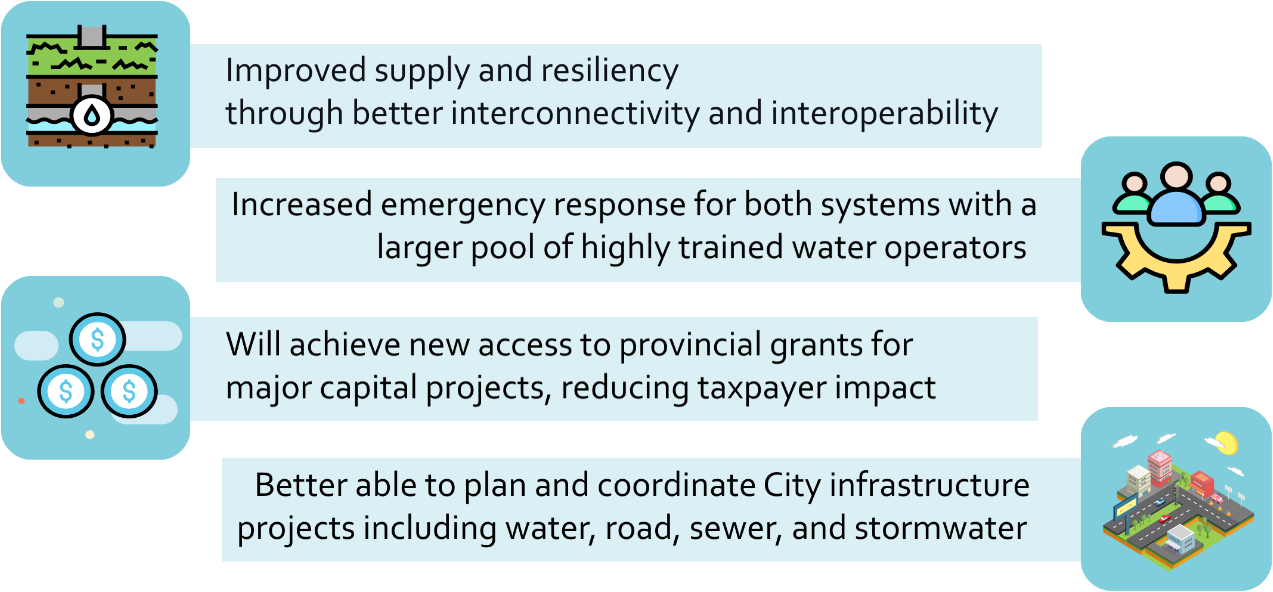
The City of Kelowna shares our vision and values and has a proven track record of delivering integrated water services to a large and diverse customer base. By joining forces, we will be able to enhance our service levels and interconnectivity, improve our resilience and emergency response, and achieve economies of scale that will benefit all our customers.
To learn about the transformative 100+ year journey of water in Glenmore-Ellison, have a look at our history page.
FAQ's:
Why transition now?
Our goal is a smooth transition that guarantees no disruption to the water quality or availability for our customers. The Glenmore-Ellison Valleys are expanding fast, we all must deal with more risks and costs from a changing climate. Based on a unanimous vote, the GEID board has determined that the best way to ensure a strong and lasting water system is through integration.
What will happen to staff at GEID?
GEID has a strong legacy in the Glenmore valley thanks in large part to the highly skilled staff that are experts within our water systems. The City and GEID are committed to ensuring that all current staff members of GEID are treated fairly during the transition, with continued employment at existing terms and conditions to ensure a seamless and successful transition.
Who will bill me and where will I pay?
GEID staff and administration will continue to operate the system and issue bills through the transition timeframe which will take approximately three years.
Could water rates or taxes change?
The transition itself will not increase rates for either utility. In the long term it should help improve resiliency and keep rates lower than otherwise. Based on economies of scale, all ratepayers will benefit. In addition, access to senior government grants and lower interest rates will provide added benefit to GEID rate payers.
The City of Kelowna will develop a financial plan within three years to merge GEID and City water rates. This will ensure that water customers are treated similarly between the two systems.
Will this impact the agricultural rate structure?
The transition itself will not increase rates for either utility. The City has a long-term goal of one rate structure for all water utility customers. During the three-year transition the City is committed to working with the agricultural community to determine the best rate structure that meets the needs of the community.
What about areas outside Kelowna such as Ellison?
The City will request that the Regional District of the Central Okanagan support the City continuing to service GEID customers located within the Regional District.
Will this affect how each utility addresses drought conditions?
GEID and the City are both aligned with the Okanagan Basin Water Board and Okanagan Waterwise programs which support water conservation across the entire Okanagan Valley. All water providers have a similar drought management plan with consistent water restrictions.
As our region has some of the driest conditions and highest per capita water use in Canada, both utilities encourage customers to monitor their usage and take steps to reduce their consumption.
Learn About Water Conservation: